


Google News - Daily Headlines
Google LLC
I use Google News - Daily Headlines as a quick way to see what is happening without opening several different news sites one after another. It is a free news and magazines app from Google LLC, aimed at people who want a changing mix of world and local coverage shaped around their interests. My experience is that it works best as a starting point: it helps me notice important stories, compare coverage, and decide what deserves a closer read.
That role matters because a personalized news feed can save time while also influencing what I notice. I do not treat every headline shown here as a complete picture of the day. Instead, I use the app to scan, investigate, and then read beyond the first suggestion when a topic affects me personally. The useful habit is to treat personalization as a filter, not as a substitute for judgment.
What makes the app useful in everyday news reading
Google News sits in the News & Magazines category, but it feels less like a traditional digital newspaper and more like a flexible news dashboard. I can open it during breakfast, check the main stories, and return later when I have more time. That makes it practical for short sessions, especially when I want awareness rather than a long reading session.
Related News

CodyCross: Crossword Puzzles - A Journey Through Words and Worlds

Coloring Games: A Digital Canvas for Mindful Creativity

How Audiobook Sync in Google Play Books Redefines Reading
A realistic example is a busy weekday morning. I might want to know whether there is a major local development, an international event, or a story connected to a topic I follow. The app gives me a compact view of those possibilities instead of requiring a search for every subject. If one headline catches my attention, I can use it as the beginning of a deeper reading session rather than spending the first few minutes deciding where to look.
The app has a broad reach, with over a billion installs, and its average rating is 4.0 from around two million ratings. Those figures suggest that it serves a very large audience, but they should not be mistaken for proof that every reader will enjoy the same experience. News preferences are personal, and the value of the feed depends heavily on whether its selection matches the subjects, locations, and sources I care about.
Related News

Why WhatsApp Messenger Still Makes Everyday Communication Feel Easy

Jurassic World: The Game Is the Better Dino Tycoon for Strategic Players

Threads in Real Life: Who Should Join, Lurk, or Leave

How SHEIN Turned Shopping Into an Endless Content Feed

How to Make Fortnite Feel Smarter on Mobile

Should You Switch to Microsoft Outlook on Mobile?
Google LLC is a familiar developer, which gives the app a recognizable trust context, but familiarity alone is not enough for me. With any personalized news tool, I pay attention to what choices are visible, how much control I have over the feed, and whether I can tell why a story is appearing. The app is most comfortable to use when I remember that convenience and personalization come with decisions about what I see.
Personalization is helpful, but it needs active steering
The main attraction is the ability to shape the news experience around my interests. That is more useful than a completely random stream because I can make the app relevant to subjects I genuinely follow. Local news can be particularly valuable here: national headlines are easy to find elsewhere, while nearby developments are often the information that affects my plans, commute, community, or conversations.
My advice is to review the feed with a little skepticism during the first few sessions. If I repeatedly open one kind of story, the selection can begin to feel increasingly narrow. That is convenient when I want depth on one subject, but less useful when I want a balanced overview. I deliberately look for stories outside my usual interests and occasionally search for a topic directly instead of relying only on the home feed.
Gallery
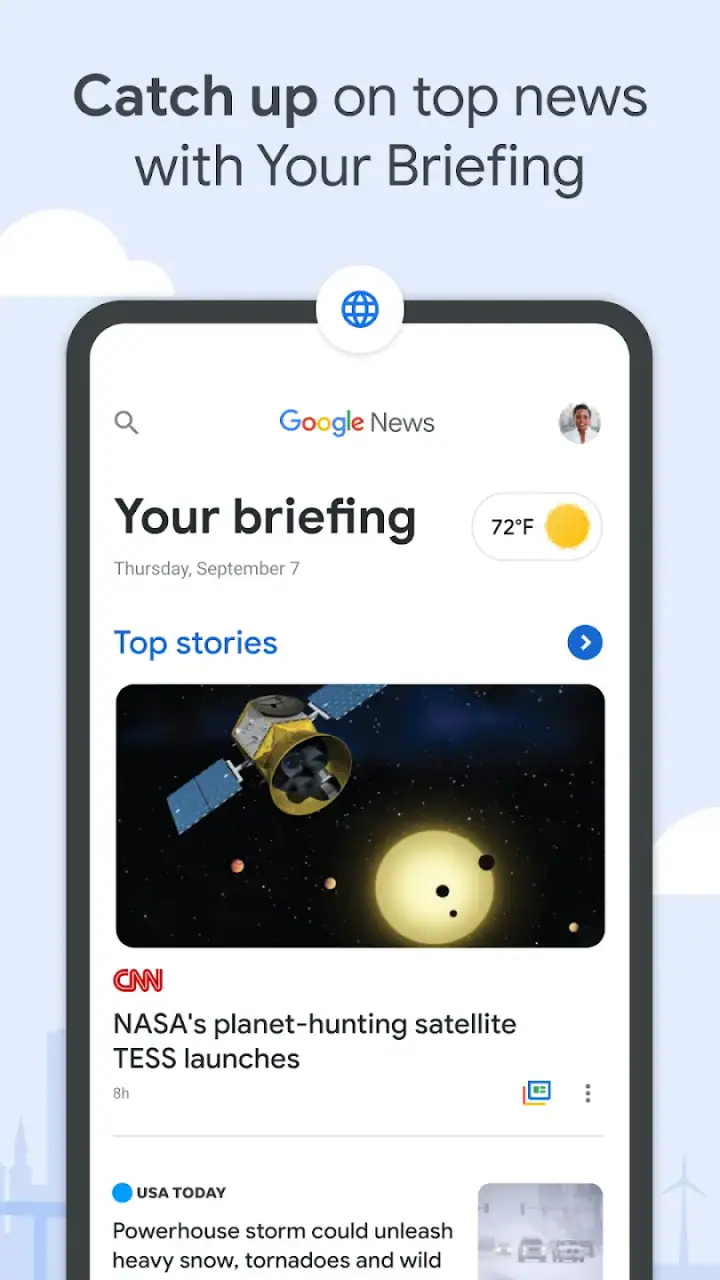
One non-obvious strength is that the app can reduce the friction between discovering a story and comparing how it is presented. A headline may lead me to coverage from multiple outlets, which helps me notice differences in emphasis, context, and wording. I do not assume that the first version I see is automatically the best one. Comparing reports is especially worthwhile for political, financial, health, or breaking-news subjects where early coverage can change quickly.
Where it fits beside other news choices
Compared with reading one newspaper app, Google News gives me a wider starting point and is less tied to a single editorial voice. That is useful when I want to see several angles or discover publications I would not normally visit. The trade-off is that a dedicated newspaper app may offer a more coherent reading experience, stronger continuity between articles, or a clearer relationship with its own newsroom.
Compared with searching the web for every story, the app is faster for routine scanning. I do not need to invent a search phrase each time I want a general update. The trade-off is that a search gives me more control over the question I am asking, while a personalized feed decides which questions are placed in front of me.
Compared with social media, I find the news-focused layout less distracting and more practical for deliberate reading. Social platforms can expose me to firsthand reactions and rapidly developing conversations, but they also mix news with commentary, promotion, and personal posts. Google News is not a guarantee of perfect neutrality, yet its dedicated purpose makes it easier for me to separate a news-reading session from general scrolling.
For someone who already follows a small group of trusted publications closely, this app may feel unnecessary. If I want a complete archive, a strong opinion section, or a subscription-based publication experience, a dedicated source may be better. Google News is strongest when I need breadth, discovery, and a convenient overview.
Controls that make the feed more manageable
The most important controls are the visible choices that let me influence what appears. I use interest management to make the feed more relevant, but I also treat those settings as something to revisit. Interests change over time. A topic that mattered last month may now be filling the screen even though I no longer want it there.
When a story or subject is not useful, I look for the option to reduce similar material rather than simply continuing to scroll past it. That small action is more effective than silently tolerating an unwanted pattern. It also gives me a clearer sense that I am shaping the app instead of accepting the feed as fixed.
Another practical tip is to separate discovery from verification. I may notice a headline in the personalized stream, then open the story and inspect the publication, date, and surrounding context before sharing it. A headline can be technically accurate while still leaving out an important qualification. This workflow takes only a moment and protects me from passing along a misleading impression.
Account controls are also part of the experience. Because this is a Google app, I pay attention to which account I am using and whether my choices are being made in the profile I intend to use. That matters on shared devices or when I switch between personal and work accounts. I prefer to make personalization decisions consciously rather than assume that every device is showing the same version of my interests.
The content rating is Teen, which is a useful reminder that the app is intended for older children and adults rather than very young readers. That rating does not mean every article will suit every family or every sensitive reader. News can include upsetting subjects, and I would not hand the app to a child without considering their age, maturity, and ability to discuss difficult stories.
Trust, privacy choices, and moments that deserve care
Personalized news is data-sensitive by nature because the subjects I read can reveal what I care about. I may open articles about health, finances, politics, religion, or a local problem simply because I am trying to understand something affecting my life. I therefore avoid assuming that a recommendation is neutral or that personalization is always harmless. I check the available account and privacy choices and prefer settings that match my comfort level.
I also remember that reading behavior can influence future recommendations. Even if I open an article only to understand why people are discussing it, the app may become more likely to show related material. That is not automatically a problem, but it is a reason to use search or browsing deliberately when I am researching a sensitive subject. I do not want one temporary curiosity to define my longer-term feed.
When I use the app on a shared phone, I am more cautious. I avoid leaving a sensitive article open, and I check that the correct Google account is active before changing interests. These are simple habits, but they give me more control over the connection between my reading choices and the recommendations I receive later.
I am also careful with notifications whenever they are offered as part of the experience. Alerts can be useful for major developments, but too many interruptions turn news into background anxiety. I prefer a small, intentional flow of updates rather than allowing every interesting headline to compete with messages, work, and daily tasks. If the alerts stop being useful, I consider them a feature to adjust rather than an obligation to tolerate.
For sensitive decisions, I do not rely on a single article surfaced by the app. Health questions deserve qualified medical sources, financial decisions require dependable professional or official information, and urgent local matters may be better checked through the relevant authority. Google News can help me find the conversation, but finding a conversation is not the same as establishing the facts.
How I keep the reading experience balanced
I get better results when I create a simple routine instead of endlessly refreshing. I scan the main feed once, open only the stories that matter, and then leave the app. This keeps the tool in its proper role and reduces the chance that I will drift into a loop of increasingly similar headlines.
For a major developing story, I compare more than one report and return later if the situation is changing quickly. Early coverage often has incomplete details, and a personalized feed can make repeated updates feel like confirmation even when all the articles trace back to the same initial information. Looking for independent reporting is a more reliable habit than counting how many headlines repeat a claim.
I also use local coverage with a specific question in mind. Instead of reading every nearby headline, I might check for changes affecting transportation, public services, weather, or community events. This makes the local side of the app more actionable. It is one of the clearest reasons I would recommend trying the app even to someone who already has a favorite national news source.
On the other hand, I would skip it if I dislike algorithmic recommendations entirely or if I want one carefully edited publication with a stable voice. I would also be cautious about using it as the only source for school research or professional work. Discovery is convenient, but serious research benefits from checking original documents, specialist publications, and authoritative sources directly.
Small frictions I noticed during regular use
The biggest limitation is not a missing button; it is the tension between convenience and control. A personalized feed can feel relevant while still leaving gaps. If I only read what looks interesting, I may miss an important subject that does not match my established interests. The app saves me effort, but I have to spend some of that saved effort checking what is absent from my routine.
Another friction is the emotional rhythm of news. A steady stream of urgent headlines can make every event feel equally immediate. I find it helpful to distinguish between genuinely time-sensitive information and stories that can wait until I have the attention to read them properly. The app makes discovery quick, but it cannot decide what deserves my personal energy.
Source comparison can also be uneven from a reader’s perspective. Seeing several reports is useful, yet more choices can create the illusion of certainty or make it harder to know which account provides the strongest context. I look beyond the headline and consider the publication, the age of the report, and whether the article explains where its information comes from.
The app is free, which removes a financial barrier and makes it easy to try. That is valuable for casual readers, students, and anyone who wants a broad overview without committing to a single paid publication. Still, free access does not remove the need to make careful choices about attention, account settings, and the kinds of stories I allow to shape my day.
Who should use it and who should choose something else
I recommend Google News to readers who want a convenient overview of world and local events, who enjoy discovering different sources, and who are willing to guide their feed rather than accept it passively. It is especially useful for people with limited time, readers who move between several interests, and anyone who wants a single place to begin a news session.
I would recommend a dedicated publication app instead to someone who values a consistent newsroom, a focused editorial identity, or a deeper subscription reading experience. I would choose direct official sources for emergencies, regulations, public notices, and other situations where accuracy and authority matter more than broad discovery.
I would also avoid making the app a constant companion if news affects my mood or concentration. A scheduled check is healthier for me than repeated opening throughout the day. The ability to personalize a feed does not mean I need to consume everything it offers.
My cautious verdict
After using it as a daily news starting point, I see Google News - Daily Headlines as a capable and flexible tool rather than a complete news solution. Its free access, broad coverage, local relevance, and personalized discovery make it easy to fit into a busy routine. The fact that it comes from Google LLC and has been available since June 27, 2012, also explains why it feels like a mature, widely used option rather than a niche experiment.
The app earns my recommendation when I use it actively: I adjust my interests, check the source behind a headline, compare coverage for important stories, and keep sensitive reading in mind when reviewing account choices. My trust depends less on the presence of a recommendation and more on whether I remain in control of what I follow, open, and share.
At no cost, it is worth trying for a broad daily scan, especially if local news and source discovery matter to you. Just do not confuse a convenient personalized stream with the whole news landscape. Used with curiosity and restraint, it can make staying informed easier; used passively, it can narrow your attention while giving the impression that you have seen everything.
FAQs for Google News - Daily Headlines
What is Google News and how does it work?
Google News is a comprehensive news aggregator that curates content from thousands of publishers globally. It uses AI algorithms to personalize the news feed based on user preferences, browsing history, and trending topics. Users can follow specific topics, publications, or regions to tailor their experience. The app ensures you receive the most relevant news in real-time.
Is Google News free to use, and are there any in-app purchases?
Yes, Google News is completely free to download and use. There are no in-app purchases. However, some content within the app may require a subscription, particularly articles from premium publications. Users can choose whether to subscribe to these publications directly through the app if they wish to access all content.
Can I customize the news feed according to my interests?
Absolutely! Google News allows extensive customization of your news feed. You can select topics, publications, and regions of interest. The app also learns from your reading habits over time to present more relevant articles. You can easily add or remove topics to refine your personalized news experience further.
How does Google News ensure the reliability of the news sources?
Google News sources its content from a diverse range of reputable publications around the world. The app employs rigorous algorithms to rank articles based on relevance, reliability, and authoritativeness. Users also have the option to flag content, which helps maintain a trustworthy news environment. Additionally, fact-checking features are integrated to provide context on contentious topics.
Can I access Google News offline?
Yes, Google News offers an offline reading feature. Users can save articles to read later, even without an internet connection. This is particularly useful for commuters or anyone who wants to catch up on news without data access. Simply download the articles while online, and they’ll be available to read offline at your convenience.
Pros
- User-friendly interface for quick browsing.
- Personalized news feed adapts to interests.
- Wide range of reputable news sources.
- Offline reading mode available.
- Timely notifications for breaking news.
Cons
- Occasional bias in news curation.
- Ads can be intrusive at times.
- Limited customization for notifications.
- Requires internet for most features.
- May drain battery with frequent updates.


